Press & media
CiteStamp is a public, CC0 citation graph you can walk as a map. Human-signed claims and machine-inferred edges are kept strictly apart, and every answer says which kind it is. A free check in the browser reads the same record to catch references that resolve to nothing. For anything on this page, write to press@citestamp.com.
At a glance
Boilerplate
One line: CiteStamp is a free, public citation graph anyone can walk, where every edge says whether a researcher signed it or a machine inferred it, and no publisher owns the record.
Short: CiteStamp is a public, CC0 citation graph of typed claims: this paper supports that one, refutes a result, extends a method. Researchers sign claims with an ORCID iD onto an append-only public log; machine-inferred coverage from open scholarly metadata sits in a separate tier that is never blended with it. Preprints and repository deposits are indexed alongside journal articles, AI assistants query the graph over MCP without a key, and a free in-browser check reads the same record to flag references that resolve to no known work, disagree with their own DOI, or have been retracted. That check uploads nothing, and the graph is forkable. CiteStamp is a 3Rivers Enterprises LLC service based in Fort Wayne, Indiana.
Story angles
- A record without a gatekeeper. An independent researcher’s citation record, signed with ORCID onto a CC0 log anyone can fork. Scholarly infrastructure that doesn’t require an institution, built by someone who doesn’t have one.
- Two tiers that never merge. Almost every citation product blends human judgement and machine extraction into one number. This one refuses to, and says on every answer which kind of edge you’re holding and who stands behind it.
- “Cites” says nothing. Forty entries in a reference list and not one records what it does. Typed claims put supports, refutes and extends on the record, signed, so disagreement is citable instead of invisible.
- The confident bluff. AI-drafted bibliographies read perfectly and cite DOIs no agency ever registered. What “does not resolve to a known work” catches (checked against every DOI agency, not just the big indexes), and why the polish is exactly the problem.
- Retractions don’t send letters. A paper cited in March can be retracted in September, and nobody tells the people who cited it. What a daily watchlist against the public retraction record changes.
Logos and screenshots
 logo-mark-512.png
the mark at 512px, transparent
 citestamp-icon-128.png
square app icon citestamp-logo-full.png
the mark, full resolution, transparent background
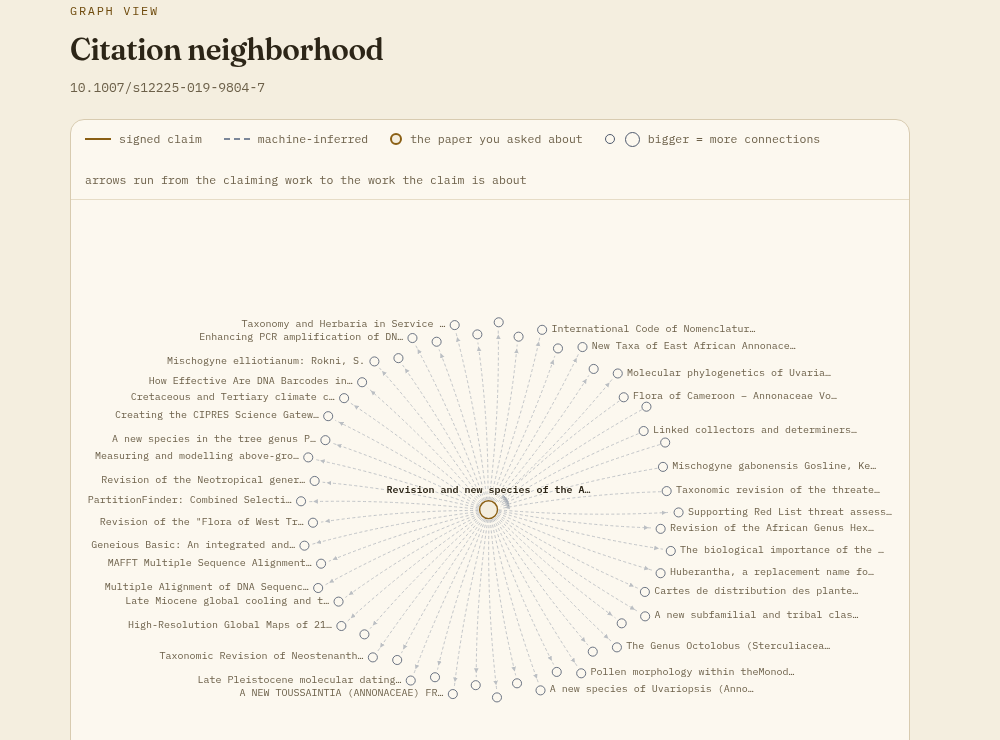
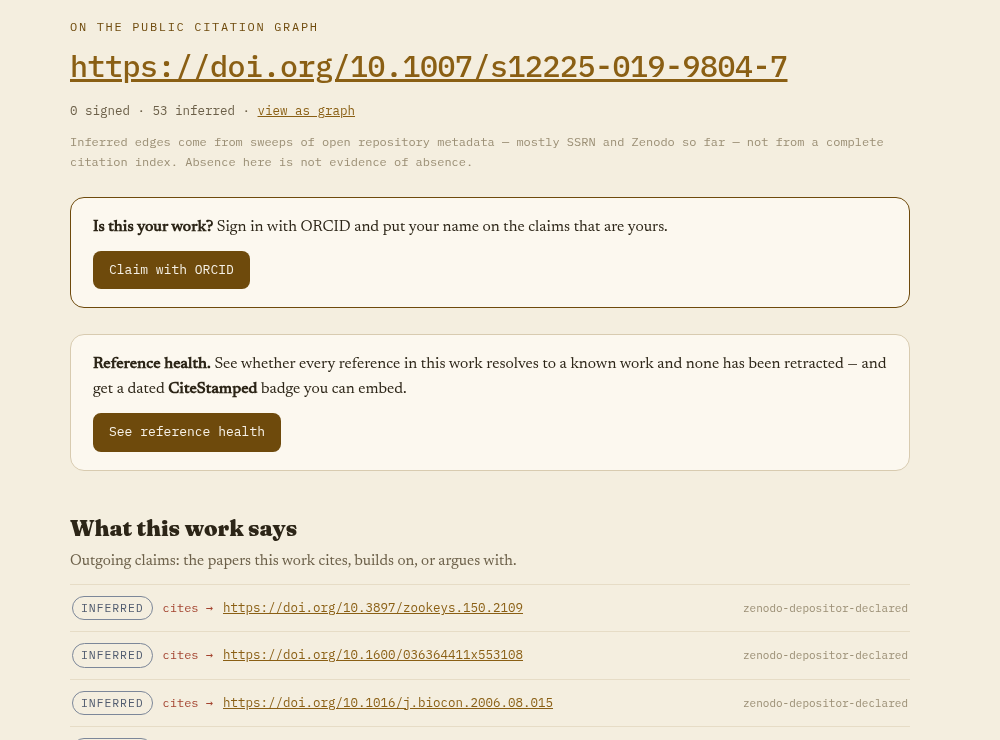

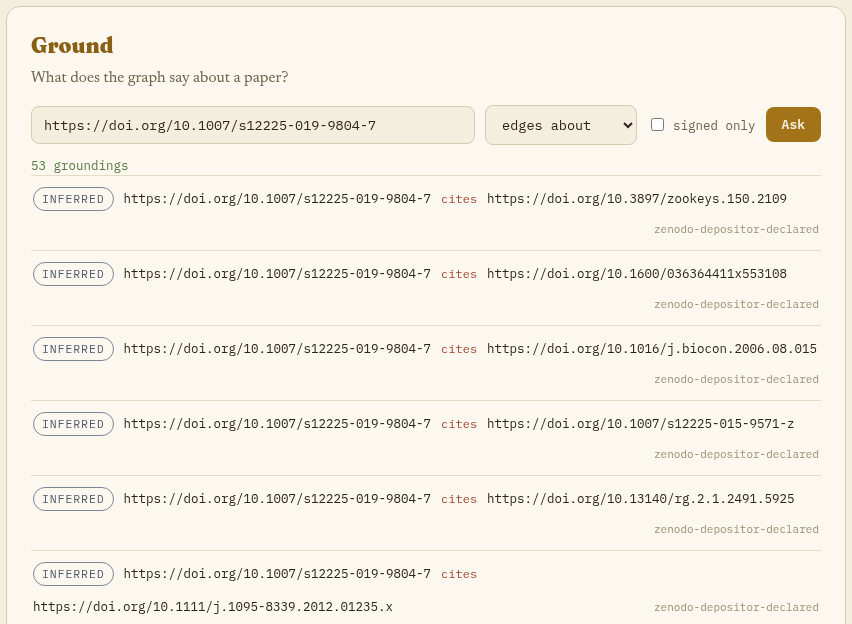
Wordmark: “CiteStamp”, one word, capital C and S. Palette: seal gold on dark ink and vellum. Each screenshot is the live product; click one for the full-size file. For interviews or other images, write to press@citestamp.com.
Launch release, July 12, 2026
Your AI hallucinated a citation. CiteStamp catches it before a reviewer does.
FORT WAYNE, Ind., July 12, 2026: 3Rivers Enterprises LLC today launched CiteStamp (citestamp.com), a free citation-health check that runs entirely in the browser. Paste a bibliography and every reference is checked against the open scholarly registries (Crossref, DataCite, and OpenAlex) for the three ways a citation goes bad: it resolves to no known work (the signature of an AI-invented reference), its DOI points at a different paper than the one cited, or its publisher has retracted it since it was written down.
AI writing tools produce references with flawless formatting and total confidence, and some of them point at papers that were never written. Retractions have the opposite problem: they rarely reach the people who already cited the paper. CiteStamp addresses both without asking anyone to upload a manuscript. Checks run client-side in the browser, and a free watchlist re-checks saved papers against the public retraction record in Crossref (publisher notices and Retraction Watch data) on each visit, and daily in the Chrome extension.
Beneath the checker is a public citation graph of typed claims (this paper supports that one, refutes that result, extends that method), in which human-signed claims and machine-inferred coverage are kept strictly apart, never blended into a single score. Researchers can claim their papers with an ORCID iD and sign claims onto an append-only public log; the graph is dedicated to the public domain and mirrored publicly, so the record can outlive its operator. Independent researchers, the people without journal or institutional citation machinery, were the first audience it was built for.
The checker is free, unlimited, and requires no account, on the web and inside the Microsoft Word, Overleaf, and Zotero panels. CiteStamp Pro ($35/year) adds what runs while you write: continuous checking in the Overleaf editor, one-click citation insertion in Word and Overleaf, automatic watchlist enrolment of every reference cited by DOI, and higher API rate limits. Free and Pro catch the same things; Pro does it without being asked.
The same engine works at scale. Journals, publishers and submission platforms can screen each submission’s reference list from their own systems through the CiteStamp reference-check API, with a key issued by agreement. AI agents ground their citations the same way, querying the public graph over MCP before they emit a reference instead of after someone catches it.
CiteStamp is live today at citestamp.com. The Chrome extension bringing the checker to Overleaf and the major scholarly sites is live on the Chrome Web Store.